
The previous May peak was observed in 2018 when the domestic PV wholesales stood at 301,238 units.

India's flagship motor show Auto Expo 2023 kicked off on Wednesday with the global unveiling of Suzuki Motor Corporation's concept electric SUV 'eVX' which is slated to hit the market by 2025. The company's Indian arm Maruti Suzuki India is among the major manufacturers participating in the show that has returned after three years. The Concept eVX is a mid-size electric SUV concept designed and developed by Suzuki Motor Corporation (SMC), Japan. It will be powered by a 60 kWh battery pack offering up to 550 km of driving range on single charge.

The limited availability of flexible (flex)-fuel vehicles in the Indian market and the slow rollout of ethanol-blended petrol by oil-marketing companies (OMCs) remain major obstacles to achieving widespread use of biofuels in the transportation sector in India. Recently, two Union ministers have emphasised India's biofuel potential, arguing that it has the capacity and potential to lead a transition towards widespread biofuel adoption. Road Transport Minister Nitin Gadkari signalled that this transition is well underway and urged car manufacturers to quickly adapt and introduce new biofuel-run vehicles, lest the government resort to taxing diesel vehicles.

Car makers are trying hard to boost sales in India.

The new Duster will go head-to-head with popular models like Hyundai Creta, Kia Seltos, Volkswagen Taigun, Skoda Kushaq, Maruti Suzuki Grand Vitara, Toyota Urban Cruiser Hyryder, MG Astor, etc in the highly competitive mid-size SUV segment.

The 2016 Ford Endeavour 2.2 is a beast of a vehicle which though is a bit down on power as compared to its 3.2-litre version but it is a monster in itself nonetheless
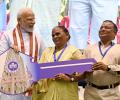
There was not a dry eye in sight as 3,024 beneficiaries of a slum rehabilitation project were overwhelmed by emotion as Prime Minister Narendra Damodardas Modi handed them the keys to their new homes at Vigyan Bhawan in New Delhi.

The China auto show saw some amazing models being rolled out, some for the first time. Rajesh Karera/Rediff.com picks the best of the lot.
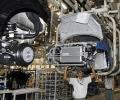
Hyundai Motor and Toyota Kirloskar Motor have announced the suspension of manufacturing operations at their respective plants amid coronavirus outbreak. On Sunday, various automakers like Maruti Suzuki India, Honda Cars, Mahindra & Mahindra and Fiat announced a temporary halt in manufacturing operations at their respective facilities.

Another downgrade for Tokyo Olympics that have their pomp and public spectacle overshadowed by COVID-19
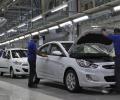
Leading carmakers Maruti Suzuki, Hyundai and Tata Motors reported robust dispatches to dealers in May on the back of strong demand for passenger vehicles across regions, even as the global semiconductor shortage continued to impact production. Mahindra & Mahindra, Kia India, Toyota Kirloskar Motor, Honda Cars and Skoda also witnessed strong demand for their models last month. The month of May also witnessed Tata Motors race ahead of Hyundai in terms of domestic wholesales.

Driven by strong demand, the overall passenger vehicle dispatches crossed 3.35 lakh units in February as automakers, including Maruti Suzuki India, Hyundai, Tata Motors and Mahindra & Mahindra, reported robust sales during the month. The dispatches of more than 3.35 lakh units last month marked an 11 per cent over February 2022. It was also the highest ever overall wholesales in the month of February. The country's largest carmaker Maruti Suzuki India on Wednesday said its domestic wholesales rose 11 per cent to 155,114 units in February as compared with 140,035 units in the same month last year.

Tata Motors, Ford, Nissan, Maruti Suzuki, Toyota Kirloskar, BMW, Renault and Isuzu have also announced price hike from next month citing impact of increase in commodity prices and foreign exchange rates.

The recall will affect 2,910 units of the sedan version of Sail and 1,090 units of compact car variant of the model.

Many say Tata Motors has perhaps paid the price for being too ambitious.

'More than one brand in a showroom is too risky because customer loyalty in this market is low. Most people don't drive different cars made by the same manufacturer for a lifetime, they experiment.'

Hero MotoCorp, Honda Motorcycles, Scooters India, TVS, Honda India, Toyota Kirloskar Motor, Ford, Nissan, Ashok Leyland are all giving the Auto Expo a miss this time.

http://im.rediff.com/money/2023/jul/20uv.jpg

India is sceptical that Tesla might import into the country cars made in China. Tesla executives were in India last month and appear to have proposed a factory in the country. But do not be surprised if that does not happen in a hurry.

India is a market for low-priced cars with low running costs. The global majors don't have models that fit the bill; only Maruti and Hyundai have successful entry-level models, observes T N Ninan.
The next edition of the country's leading automobile show, the Auto Expo, will be held from January 13-18 next year, having been cancelled this year due to the COVID-19 pandemic. The last edition of the biennial automobile show took place in February 2020 amid fears of the spread of the coronavirus across the world. It was supposed to take place in February this year at Greater Noida but was postponed due to the worsening COVID-19 situation.

The company, which currently sells a range of vehicles from Alto to S-Cross, said it has taken the decision to hike prices due to an increase in input costs. The weighted average price rise, with effect from April 18, in ex-showroom prices (New Delhi) across models is 1.3 per cent, it added.

There are few firms that are applauded for managing a healthy top line growth along with an impressive brand image that inspires most companies.

The global semiconductor shortage hit passenger vehicle sales in September, with major manufacturers like Maruti Suzuki, Hyundai and Mahindra & Mahindra reporting a decline in sales on Friday. Kia India and Honda Cars also reported a dip in wholesales last month as compared with the year-ago period. Carmakers like Tata Motors, Toyota Kirloskar Motor, Nissan and Skoda, however, reported an increase in passenger vehicle dispatches last month despite supply chain issues.

'Some of the launches may get deferred due to the semiconductor shortage, which is unlikely to get resolved before the second half of 2022.'

Modi is courting Japanese investment in an ambitious industrial "corridor" to run between Delhi and Mumbai.

Tokyo has mostly delivered on that hope, despite some early teething problems.

Benchmark equity indices Sensex and Nifty closed higher on Friday after two days of fall, helped by buying in metal, telecom and auto stocks amid a firm trend in global markets. Automakers led by Maruti Suzuki India, Hyundai, Mahindra & Mahindra reporting robust wholesales of passenger vehicles and GST collections crossing Rs 1.50 lakh crore for the third straight month in May also added to the optimism. The 30-share BSE Sensex climbed 118.57 points or 0.19 per cent to settle at 62,547.11.

Experts attribute the high valuation of Indian auto makers to the faster growth in India compared to the rest of the world.

After a long delay, Thailand opened its twice-postponed Bangkok international motor show to the public as coronavirus restrictions eased, with nearly all attendees wearing masks and face shields.

The deadly coronavirus has forced us to adopt new ways of life.

Passenger vehicle sales continue to drop in June; Maruti, Hyundai, Tata Motors, Toyota witness decline. Mahindra & Mahindra, however, reported a 4 per cent growth.

Besides their country of origin, General Motors, Ford Motor and Harley-Davidson have another trait in common: all three have failed in India, the world's fifth largest automobile market. All three of them took a tough call to de-prioritise India as a market amid disruption from heightened regulations and sharper focus on capital allocation by the parent.

Speaking at the forum, Suzuki Motor Corporation (SMC) representative director and president Toshihiro Suzuki said, "Suzuki's future mission is to achieve carbon neutrality with small cars. "We will continue active investment in India to realise Self-reliant India (Atma-nirbhar Bharat)." Under the MoU, the company's wholly-owned arm Suzuki Motor Gujarat Pvt Ltd (SMG) will invest Rs 7,300 crore for the construction of a plant for BEV batteries at a land neighboring to SMG's existing plant by 2026.

Major automakers, including Maruti Suzuki, Hyundai, Tata Motors, Mahindra & Mahindra, Kia, Toyota and Honda, on Thursday reported healthy growth in passenger vehicles sales in June, recovering from the disruptions induced by the second wave of COVID-19. The country's largest carmaker Maruti Suzuki India (MSI) posted total sales of 1,47,368 units in June, up from 46,555 units in May. Its domestic dispatches to dealers last month stood at 130,348 units, up from 35,293 units in May, as easing of COVID-related restrictions helped the auto major to dispatch more units to dealerships.
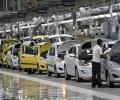
Data available from top six players - Maruti Suzuki, Hyundai, M&M, Tata Motors, Honda and Toyota - shows an average growth of about 42 per cent for the industry in June

While Hyundai Motor India reported a marginal growth, Toyota Kirloskar Motor witnessed a dip in sales last month.
Passenger vehicle exports from India increased 43 per cent in FY22, with Maruti Suzuki India leading the segment with dispatches of over 2.3 lakh units, as per the latest data by industry body SIAM. The total passenger vehicle (PV) exports stood at 5,77,875 units in 2021-22 fiscal, as compared to 4,04,397 units in 2020-21. Passenger car shipments saw 42 per cent growth at 3,74,986 units, while utility vehicle exports rose 46 per cent at 2,01,036 units during the last fiscal, the data by the Society of Indian Automobile Manufacturers (SIAM) showed.
Major automobile manufacturers like Maruti Suzuki, Hyundai, Mahindra & Mahindra, Tata Motors and Toyota Kirloskar on Tuesday reported decline in domestic passenger vehicle sales in May compared to the previous month as a spike in COVID-19 cases and lockdowns across various states hit production and dispatches. The country's largest carmaker Maruti Suzuki India (MSI), which shut production from May 1 to May 16 so as to divert oxygen from industrial use for medical purposes, reported domestic dispatches to dealers at 35,293 units last month, down 75 per cent from 142,454 units in April. The company said sales of its mini cars, comprising Alto and S-Presso, declined by 81 per cent to 4,760 units in May as against 25,041 units in April this year.

In October, the company had launched Ciaz in both petrol and diesel options.
 © 2026 Rediff.com - Advertise with us - Disclaimer - Privacy Policy - Sitemap - Feedback - About us - Terms of use - Grievances